Blog results
Walking Pad Weight Loss: Realistic Calories and a Plan
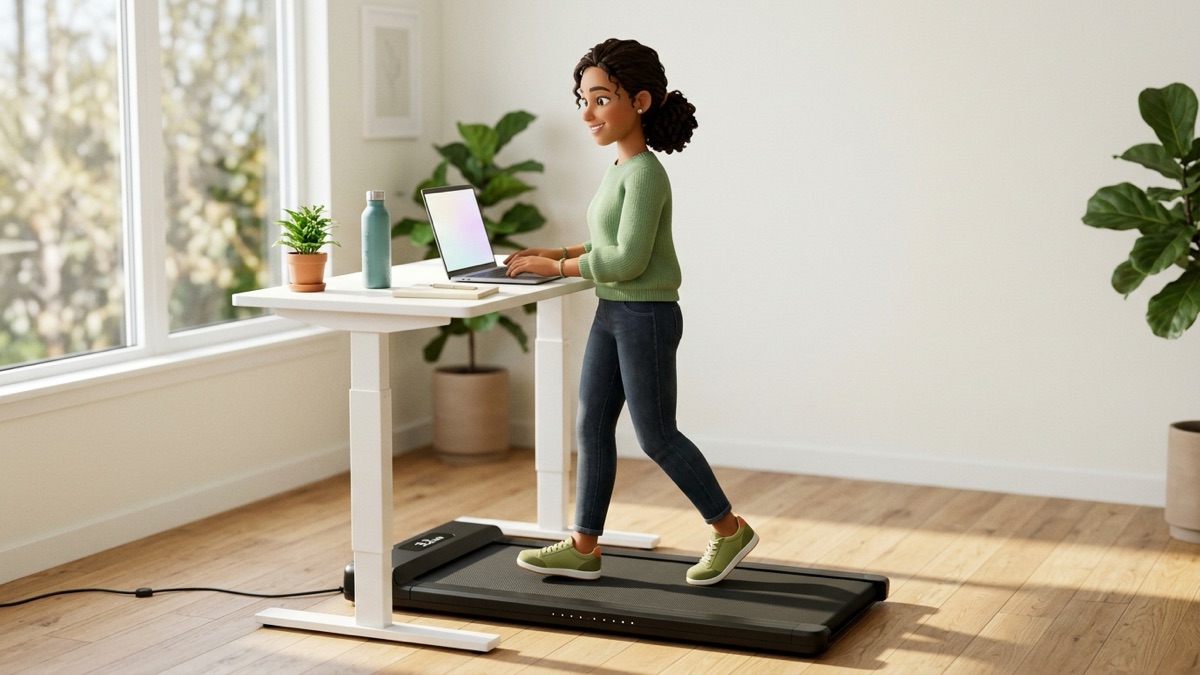
Somewhere online a walking pad is "burning 500 calories an hour while you answer email". Yours is quietly humming along at 2 mph, and you would like to know what it is actually doing for you. Here is the arithmetic, the research on what the arithmetic means for weight, and a plan built on the one number you control: minutes.
Quick answer
A walking pad burns a modest, real number of calories: by the ACSM walking equation, roughly 110 kcal gross for a 155 lb walker in 30 minutes at 2.5 mph, about 70 of them beyond sitting. Five 45-minute walks a week add about 500 extra kcal. That can support weight loss alongside food habits, but the body adapts, so expect slow change over months, not weeks, and no guarantees.
Key takeaways
- Calories from walking come from a published equation that uses speed, incline and body weight. The numbers are estimates, and they are smaller than most apps suggest.
- The figure that matters for a deficit is net calories, the energy above what you would have used sitting. For a desk walk that is roughly two thirds of the gross number.
- The "3,500 calories per pound" rule overstates weight loss. Research in The Lancet puts a sustained daily change at about 10 kcal per day for each eventual pound, half of it arriving in the first year.
- The CDC calls 1 to 2 pounds a week a gradual, steady pace and says people who lose weight that way are more likely to keep it off.
- Start from minutes, not pounds: 150 to 300 moderate minutes a week is the health guideline, and a pad makes it unusually easy to reach.
How many calories does a walking pad burn?
The American College of Sports Medicine's walking equation estimates oxygen use from speed and grade: VO2 in mL per kg per minute = 0.1 x speed in meters per minute + 1.8 x speed x grade + 3.5. Each liter of oxygen is worth about 5 kcal, so calories per minute = VO2 x body weight in kg / 200. That last step is why the same walk burns more for a heavier person: you are moving more mass.
Two honest footnotes come with the equation. It is stated to be most accurate between 1.9 and 3.7 mph, which covers nearly every pad speed. And a 2021 validation study found it tends to underpredict walking intensity slightly, so if anything your real number is a touch higher, not lower. The table gives gross calories for 30 minutes on a flat pad; the last row is the resting energy you would have used sitting still for those 30 minutes, which you subtract to get the net figure.
| 30 minutes, flat pad | 130 lb | 155 lb | 200 lb | 250 lb |
|---|---|---|---|---|
| 2.0 mph (2.5 METs) | about 78 | about 94 | about 121 | about 151 |
| 2.5 mph (2.9 METs) | about 90 | about 108 | about 139 | about 174 |
| 3.0 mph (3.3 METs) | about 102 | about 122 | about 157 | about 196 |
| 3.5 mph (3.7 METs) | about 114 | about 136 | about 175 | about 219 |
| Resting, to subtract for net | about 31 | about 37 | about 48 | about 60 |
So a 155 lb walker at 2.5 mph nets about 70 kcal in half an hour, and a 200 lb walker about 90. Incline changes the picture more than speed does: the same 155 lb walker at 3 mph on a 5 percent incline uses about 200 kcal gross in 30 minutes. Our walking pad calories guide has the hourly figures and the incline table, and the 12-3-30 guide shows what the steepest version of a walk looks like in the same units.
Try it
The walking pad calories calculator runs this equation for your weight, speed, incline and minutes, shows gross and net, and prints the formula with your numbers in it. Use it to compare two sessions rather than to count every bite.
What does a week on the pad add up to?
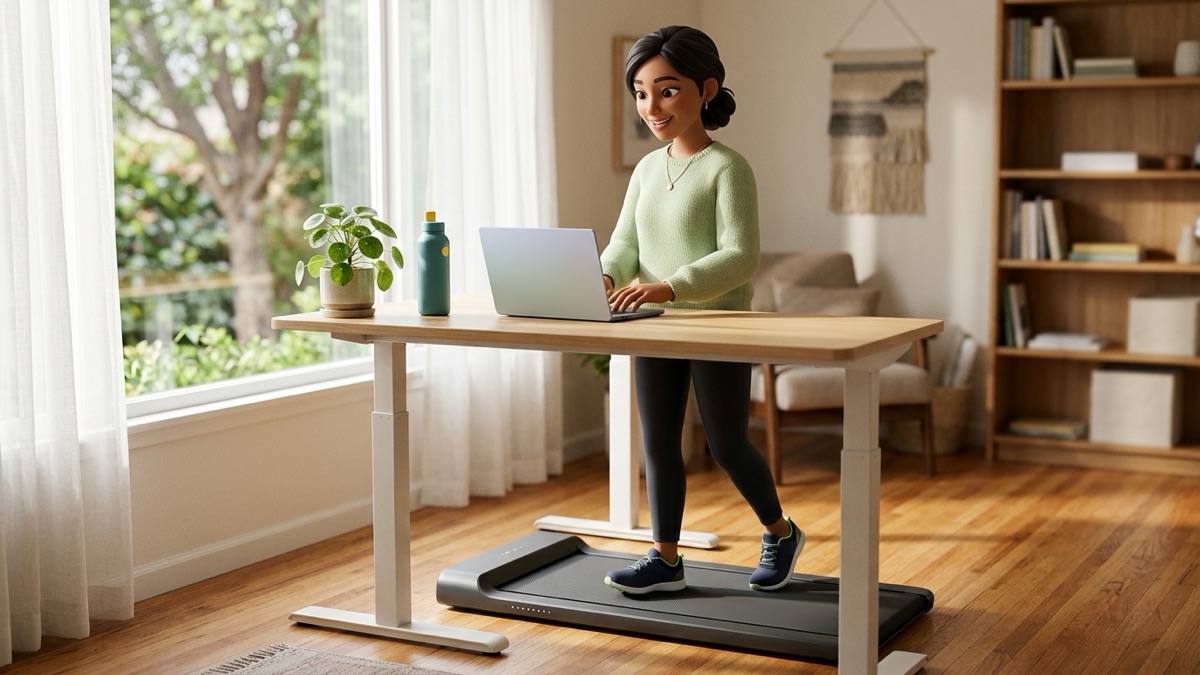
Take a realistic schedule: five days a week, 45 minutes at 2.5 mph, 155 lb. Gross is about 160 kcal a session, net about 105, so the week adds roughly 800 kcal gross and 530 kcal net. Spread over seven days that is about 75 extra kcal a day. Make it 200 lb and the same schedule nets about 680 kcal a week, close to 100 a day.
Those are not nothing. They are also not the 500 an hour the internet promised, and pretending otherwise is how people end up discouraged in week three. The week view is the right one: the pad's advantage is not intensity, it is that 225 minutes a week of walking happens while you were going to be at the desk anyway, which comfortably clears the 150 minutes the CDC asks adults for and lands inside the 150 to 300 range the Physical Activity Guidelines recommend. The calorie deficit guide turns these weekly totals into daily food terms.
What does that mean for weight, honestly?
The old rule says 3,500 kcal equals a pound, so 530 extra kcal a week should be a pound every six or seven weeks, forever. It does not work that way, and the reason is worth understanding because it protects you from quitting.
In a 2011 paper in The Lancet, Kevin Hall and colleagues showed that the 3,500 rule "ignores dynamic physiological adaptations to altered body weight". As you lose weight, a smaller body uses less energy, so the gap you opened narrows on its own. Their model gives a much better rule of thumb: every permanent change of about 10 kcal a day leads to an eventual change of about 1 pound, with half of that change arriving in roughly a year and about 95 percent within three years.
Apply it to the pad week above. Seventy-five extra kcal a day, if nothing else changes, points to an eventual change of about 7 to 8 pounds, half of it in the first year. That is a real result from a real habit, and it is slow. It also explains why weight-loss programs typically plateau after six to eight months, which the authors attribute mostly to people drifting back to old habits rather than to the body hitting a wall.
Heads up
This is arithmetic about averages, not a prediction about you. Food, sleep, stress, medications, age and genetics all move the number. The NIH's own Body Weight Planner warns that its values run too high for people with an unusually low metabolism or who are very sedentary, and tells users with health questions to consult their provider. If you are managing your weight under a clinician's care, use their targets, not a blog's.
What pace of weight loss is healthy?
The CDC recommends losing weight "at a gradual, steady pace, about 1 to 2 pounds a week", and notes that people who lose weight this way are more likely to keep it off than those who lose it fast. It lists regular physical activity alongside healthy eating, sleep and stress management as the pieces of a healthy weight loss lifestyle; it does not mention calories at all.
Read that pace against the pad numbers and the division of labor becomes obvious. A pound a week is a deficit far larger than any desk walk creates. Food habits do most of that work; the pad's job is activity, the health benefits that come with it, and a steady contribution that makes the rest easier to sustain. People who expect a walking pad to be the whole plan are usually disappointed. People who treat it as the part of the plan that happens automatically tend to keep going.
A 12-week plan built on minutes
This plan targets the activity guideline first and lets weight follow. Speeds are suggestions for a flat pad; use the talk test (you can talk but not sing) to find moderate intensity, which the CDC defines as 3 to 5.9 METs and illustrates with brisk walking at 2.5 mph or faster.
| Weeks | Sessions a week | Minutes a session | Speed | Weekly minutes | Net kcal a week, 155 lb (estimate) |
|---|---|---|---|---|---|
| 1 to 2 | 4 | 20 | 2.0 mph | 80 | about 150 |
| 3 to 4 | 5 | 25 | 2.0 to 2.5 mph | 125 | about 270 |
| 5 to 6 | 5 | 30 | 2.5 mph | 150 | about 350 |
| 7 to 8 | 5 | 40 | 2.5 mph | 200 | about 470 |
| 9 to 10 | 5 | 45 | 2.5 to 3.0 mph | 225 | about 600 |
| 11 to 12 | 5 to 6 | 45 to 50 | 2.5 to 3.0 mph | 250 to 300 | about 700 |
By week five you are at the guideline. By week nine you are in the range the Physical Activity Guidelines describe for adults, and the weekly net figure has grown by about four and a half times without a single heroic session. If your pad has incline, add 2 to 3 percent in weeks 7 to 12 instead of speed; it raises the METs more and keeps typing possible. The full 12-week walking plan breaks this into a printable week-by-week table, and how long you should walk on a walking pad explains the minutes math on its own.
Tip
Track minutes and miles, not pounds, for the first month. They come straight from the pad, they go up every week on this plan, and they are the thing the research says to build. Weigh yourself no more than weekly, and judge the trend over months.

What results can you realistically expect?
Ask pad owners what changed and the first answers are rarely the scale. They talk about afternoons without the slump, a step count that stopped embarrassing them, knees that feel better for moving, and sleeping more soundly. Those fit what the guidelines promise for regular activity, and they arrive long before weight does. Our walking pad results guide sets out what tends to change at 30, 60 and 90 days in those terms.
On weight, expect the Lancet math: slow, real, and dependent on the rest of your life staying roughly the same or improving. Be suspicious of before-and-after photos tied to a pad alone; the people in them almost always changed how they ate too, and good for them. A pad makes one part of the equation effortless. It does not do the other parts.
Heads up
Set the pad on a flat floor with clear space behind it, keep cords away from your feet, stay at 1 to 2 mph while you type, wear shoes with grip and stop if you feel dizzy, short of breath or in pain. If you have a heart condition, high blood pressure, joint or balance problems, are pregnant, or have been inactive for a long time, talk with your doctor before starting this plan.
The takeaway
A walking pad is an honest, modest calorie burner and an excellent minutes machine. Use the equation to know what a session is worth, use the week to see it add up, and use the research to set your expectations: about 10 kcal a day per eventual pound, half of it in the first year, with food doing the heavy lifting. Build to 150 to 300 minutes, keep the speed where you can still work, and let the months do their job. The PadStride app, coming to Android first, will count each session from the speed you set and show your weekly miles so the trend is the thing you watch.
PadStride guides explain and estimate; they do not promise weight loss or any health result. Calorie figures come from a published equation and carry its limits, and nothing here is medical advice. If you have a heart condition, joint or balance problems, or are pregnant, talk with your doctor before you start, keep the speed low while you type, and stop if you feel dizzy, short of breath or in pain.
Questions walkers ask
How many calories does a walking pad burn in 30 minutes?
By the ACSM walking equation, a 155 lb walker at 2.5 mph on a flat pad uses about 110 kcal gross in 30 minutes, of which about 37 are resting energy, so roughly 70 extra. At 200 lb the figures are about 140 gross and 90 extra. Speed and incline raise them.
Can you lose weight with a walking pad?
A walking pad adds real activity and a modest number of calories, which can be part of weight loss. Whether weight changes depends on food, sleep, consistency and time, so no walk by itself can promise a result. The honest approach is minutes first, then see what the scale does over months.
How long should I walk on a walking pad to lose weight?
Build toward the guideline first: 150 to 300 minutes of moderate activity a week, which is 30 to 60 minutes on five days. That is the amount the Physical Activity Guidelines recommend for health, and it is a sensible base for any weight goal.
Why is the 3,500 calories per pound rule wrong?
It treats the body as static. Research by Hall and colleagues shows the body adapts as weight changes, so a sustained daily change produces roughly half the loss the rule predicts, spread over years rather than weeks.
Is walking at 2 mph while working worth anything?
Yes. It is light rather than moderate intensity by the CDC's MET bands, but the current guidelines say any amount of activity has health benefits and that adults should move more and sit less. It also adds up: a 200 lb walker at 2 mph uses about 30 kcal more every half hour than sitting.
Where these facts come from
- Moore et al., Development of a Cadence-Based Metabolic Equation for Walking, Medicine and Science in Sports and Exercise 2021 (the ACSM walking equation and its limits): pmc.ncbi.nlm.nih.gov/articles/PMC7896743
- IDEA Fitness Journal: How to Calculate Calories Expended: www.ideafit.com/how-to-calculate-calories-expended
- Hall et al., Quantification of the effect of energy imbalance on bodyweight, The Lancet 2011: pmc.ncbi.nlm.nih.gov/articles/PMC3880593/
- CDC: Steps for Losing Weight: www.cdc.gov/healthy-weight-growth/losing-weight/index.html
- CDC: Adult Activity: An Overview: www.cdc.gov/physical-activity-basics/guidelines/adults.html
- CDC: How to Measure Physical Activity Intensity: www.cdc.gov/physical-activity-basics/measuring/index.html
- Physical Activity Guidelines for Americans, 2nd edition: Top 10 Things to Know: odphp.health.gov/our-work/nutrition-physical-activity/physical-activity-guidelin
- NIH Body Weight Planner (NIDDK): www.niddk.nih.gov/bwp