Blog programs
12-3-30 on a Walking Pad: How to Do It Without 12% Incline
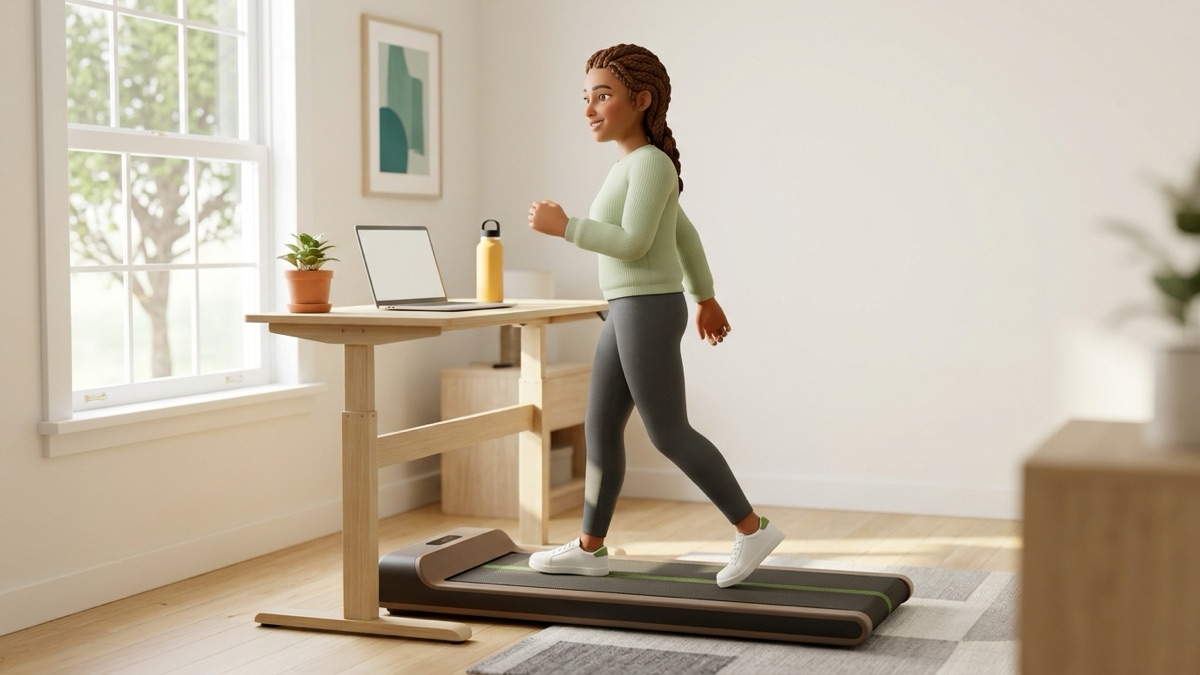
You bought a walking pad, you keep seeing 12-3-30 everywhere, and the incline button on your pad goes to 5. Or it does not exist. The good news is that the 12 is the only part of the workout a pad cannot copy, and arithmetic can stand in for it.
Quick answer
12-3-30 is a treadmill walk at a 12 percent incline, 3 mph, for 30 minutes, about 8.3 METs and roughly 305 kcal for a 155 lb walker by the ACSM walking equation. Most walking pads cannot reach 12 percent, so match the energy instead: about 75 minutes at 3 mph on a flat pad, 46 minutes at 5 percent, or 35 minutes at 9 percent.
Key takeaways
- The three numbers are the whole workout: incline 12 percent, speed 3 mph, time 30 minutes. There are no intervals.
- Walking pads are built to slide under a desk, so on the makers' pages as of November 2026 their inclines run from none to about 9 percent, with a few taller models reaching 12 to 14.
- Incline is where the effort lives. At 3 mph the ACSM equation gives 3.3 METs flat, 5.4 METs at 5 percent and 8.3 METs at 12 percent.
- You can match the estimated calories on your pad by walking longer or a little faster, and the 12-3-30 timer does the math for your weight and incline.
- Matching calories is not matching the hill. A steep incline loads calves, glutes and lower back in a way a flat belt does not, so it is also riskier to jump into.
What is 12-3-30, and where did it come from?
The Cleveland Clinic describes it simply: raise the treadmill incline to 12 percent, set the speed to 3 mph, and walk for 30 minutes. Lauren Giraldo first shared the routine on YouTube in 2019 and it took off as a TikTok trend a year later. TODAY reports that she is not a fitness professional and that she chose the numbers for personal reasons: 12 was the highest incline on her gym's treadmill, 3 mph felt like a brisk walk without running, and 30 minutes came from her grandmother's advice to move for half an hour a day.
That origin matters for pad walkers. The 12 was never a physiological magic number. It was the top of one machine's dial. Your pad has a different dial, and the honest question is what the same effort looks like on it.
Fun fact
The Cleveland Clinic's exercise physiologist puts the calorie burn at a 12 percent incline at "nearly double" walking on a flat surface. The ACSM equation agrees once you include resting energy: 8.3 METs against 3.3 at the same 3 mph.
Why can't most walking pads do 12-3-30?
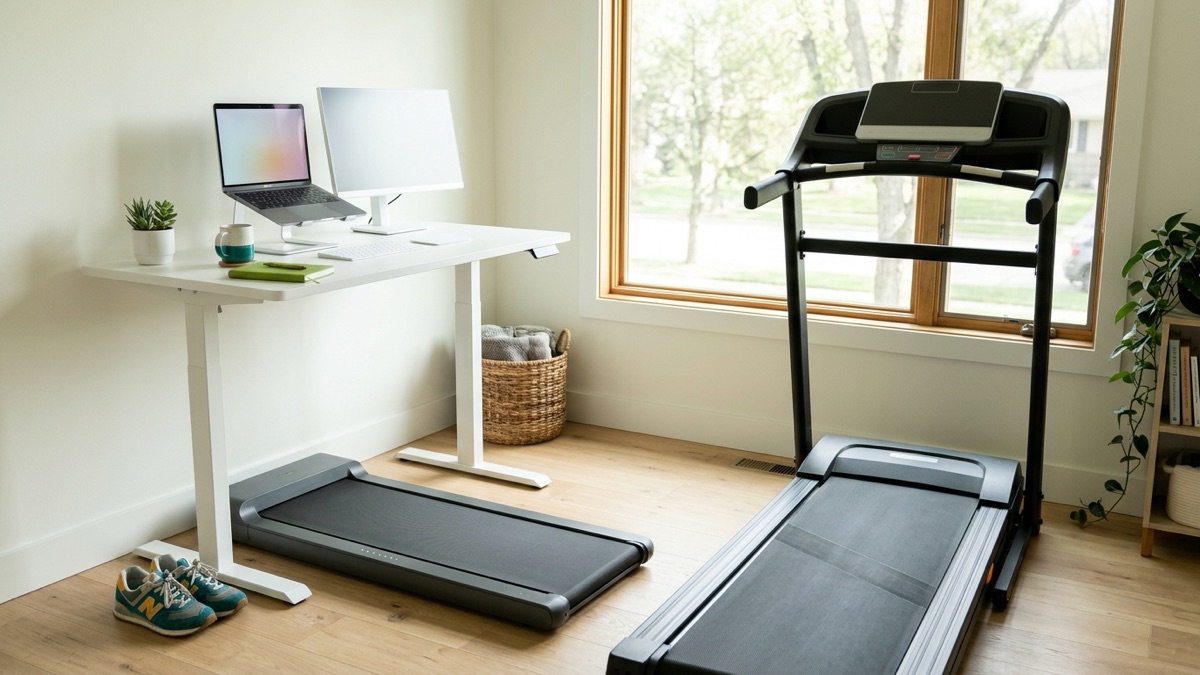
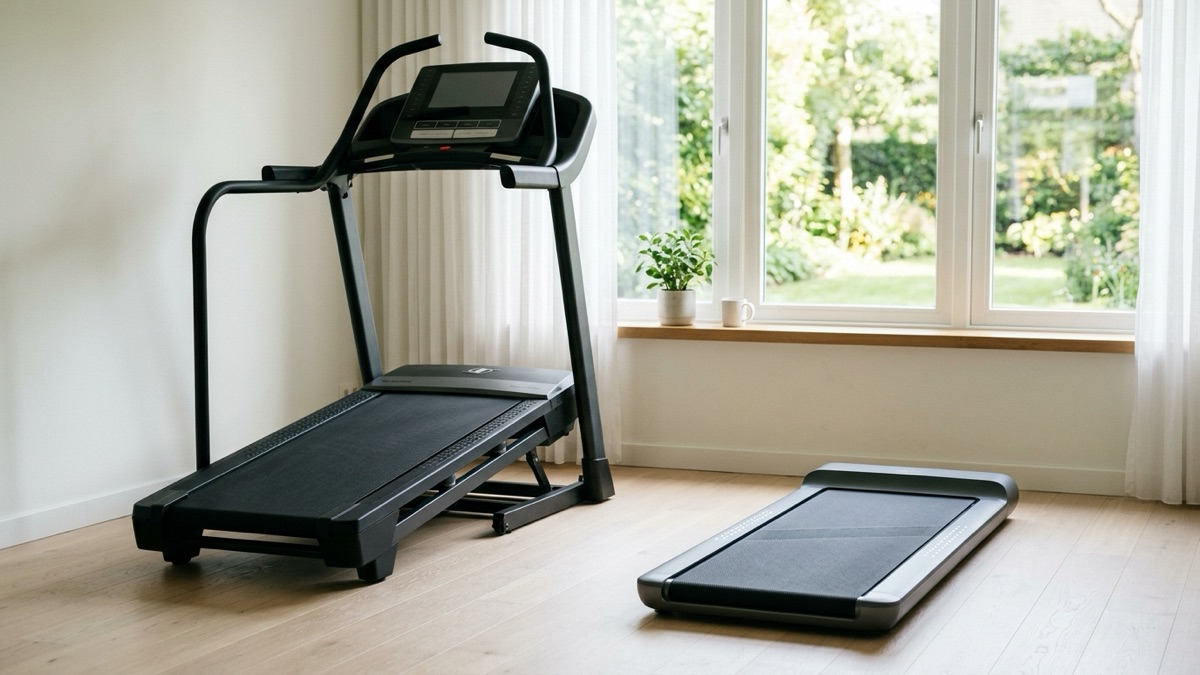
A walking pad is a low deck with no handrails, designed to disappear under a desk. Incline needs height, and height is the one thing a pad is designed not to have. Here is what the makers' own product pages say about incline, read in November 2026. PadStride is made by Viral Labs and is not affiliated with any walking pad brand, retailer or app named here.
| Pad (maker's page, November 2026) | Incline | Top speed | Max user weight |
|---|---|---|---|
| Egofit Walker Pro M1 | fixed 5 percent | 3.11 mph | 220 lb |
| UREVO SpaceWalk 5L | 0 to 9 percent, automatic | 4.0 mph | 400 lb |
| WalkingPad A1 Pro | none listed | 3.75 mph | 300 lb |
UREVO's taller CyberPad models list 0 to 14 percent, which shows the trend: the more incline a pad offers, the thicker and heavier it gets, and the less it behaves like a pad. For most people reading this, the realistic range is zero to nine. Our walking pad vs treadmill guide covers the other differences, and the speed cap is why running on a pad is a separate conversation.
How hard is 12-3-30 really?
The cleanest way to compare walks is the ACSM walking metabolic equation, which estimates oxygen use from speed and grade: VO2 in mL per kg per minute = 0.1 x speed in meters per minute + 1.8 x speed x grade + 3.5. Divide by 3.5 for METs, where one MET is the energy of sitting quietly, and the CDC counts 3 to 5.9 METs as moderate intensity.
At 3 mph the speed is 80.5 meters per minute. On a flat belt that gives 11.5 mL/kg/min, or 3.3 METs: a moderate walk, right where the CDC's brisk-walking example lives. At a 12 percent grade the incline term adds 1.8 x 80.5 x 0.12, about 17.4 more, for a total of 28.9 mL/kg/min, or 8.3 METs. That is well into vigorous territory for most people, which is why 12-3-30 feels nothing like a stroll.
Calories follow from body weight: kcal per minute = VO2 x weight in kg / 200. For a 155 lb (70.3 kg) walker that is about 10.2 kcal a minute at 12 percent, roughly 305 kcal in 30 minutes. A 200 lb walker lands near 395. The equation is stated to be most accurate between 1.9 and 3.7 mph, so 3 mph sits comfortably inside its range, and a 2021 validation study found it tends to underpredict a little rather than flatter you. Our 12-3-30 calories guide walks through the numbers for other weights.
How do you match 12-3-30 on a pad?
Pick the incline your pad can actually hold, then solve for time or speed so the estimated calories come out the same. Because both the target and the substitute scale with your weight, the times below are the same for everyone; only the calorie column changes.
| Your pad | Settings | METs | Time to match 12-3-30 | Kcal, 155 lb walker |
|---|---|---|---|---|
| The real thing | 12 percent, 3 mph | 8.3 | 30 minutes | about 305 |
| Flat pad | 0 percent, 3 mph | 3.3 | about 75 minutes | about 305 |
| Fixed 5 percent | 5 percent, 3 mph | 5.4 | about 46 minutes | about 305 |
| 5 percent, faster | 5 percent, 4 mph | 6.8 | about 36 minutes | about 305 |
| 9 percent | 9 percent, 3 mph | 7.0 | about 35 minutes | about 305 |
| 9 percent, faster | 9 percent, 3.6 mph | 8.3 | 30 minutes | about 305 |
Two things jump out. First, on a flat pad there is no 30-minute walking version: matching 12-3-30 in half an hour on a flat belt would need about 9.5 mph, which is running. Second, every bit of incline you do have is worth a lot. Going from flat to 5 percent cuts the matching time from 75 minutes to 46, more than any speed change a pad allows.
Try it
The 12-3-30 timer takes your weight, your pad's top incline and its top speed, shows the real 12-3-30 for you, and offers the longer and the faster version with one tap to load either into the countdown. It beeps every five minutes and prints a session card.
What should a pad version look like week by week?
Even people with a 12 percent treadmill are told not to start at 12. Dr. Dennis Cardone, quoted by TODAY, calls the full routine "too much too soon" for a newcomer, says it should have a recovery day, and suggests starting with a flat 0-3-30 before adding incline. The Cleveland Clinic's Katie Lawton suggests trying 5 percent, slowing the pace, or shortening the time until the full version is within reach.
A pad makes that gradual approach easy, because you are matching energy rather than copying a dial:
- Week 1: 3 mph, flat or your lowest incline, 30 minutes, three or four days with a rest day between. Learn how your pad feels at 3 mph before you add anything.
- Week 2: Add incline if you have it, in the smallest steps your pad offers, and keep 30 minutes. If your pad is flat, add 10 minutes instead.
- Week 3: Reach your pad's top incline at 3 mph and hold 30 minutes, or 45 to 50 minutes flat.
- Week 4: Use the matching time from the table above as your long session once or twice a week, with shorter walks on the other days.
Posture does the rest. Physical therapist Vijay Daryanani, also quoted by TODAY, calls the incline "a critical piece" and asks walkers to watch their form: upright, eyes forward, hands off any rail or desk edge. Leaning on your arms takes work away from your legs and quietly makes the estimate wrong. Our 12-3-30 for beginners plan spells out a four-week ramp, and walking pad workouts has the other routines a pad does well.
Heads up
Healthline's trainer source notes that people with existing knee, hip or lower-back issues may find a sustained incline taxing, and that for people new to exercise or living with a heart condition the incline may push heart rate too high. If any of that is you, talk with your doctor before trying an incline program. Set the pad on a flat floor with clear space behind it, keep cords away from your feet, wear shoes with grip, and stop if you feel chest pain, dizziness or unusual shortness of breath.
Is the flat version the same workout?
No, and it is worth being plain about that. The equation matches oxygen use and therefore calories. It does not match which muscles do the work. Walking uphill shifts load to the calves, glutes and the muscles along the lower back, which is both why incline walkers feel it the next day and why the overuse warnings above exist. Seventy-five flat minutes are gentler on those tissues and harder on your calendar.
If your goal is simply to move more and hit the weekly minutes, the flat version is a perfectly good way to spend the same energy, and the CDC guideline counts it. If your goal is specifically the hill, a pad with 9 percent gets you most of the way, and a treadmill gets you there. Our guide to incline walking on a pad has sessions built around the inclines pads really have, and 12-3-30 without incline goes deeper on the flat options.
How do you track a pad version?
A wrist tracker is the wrong instrument here. With your hands still, it misses steps, and it has no idea your belt is tilted. Trust the two numbers the pad gives you exactly, speed and time, and let a formula do the rest. The PadStride app, coming to Android first, will run that math live from the speed and incline you set and keep your 12-3-30 sessions together. Until then the timer on this site does the same job for one session at a time.
The takeaway
12-3-30 is a steep walk, not a mystery. Your pad probably cannot tilt to 12, so stop fighting the dial and match the energy instead: about 75 minutes flat, 46 at 5 percent, 35 at 9 percent, or a little faster for 30. Start lower than you think, keep your hands off the desk, and let the beeps count the minutes.
PadStride guides explain and estimate; they do not promise weight loss or any health result. Calorie figures come from a published equation and carry its limits, and nothing here is medical advice. If you have a heart condition, joint or balance problems, or are pregnant, talk with your doctor before you start, keep the speed low while you type, and stop if you feel dizzy, short of breath or in pain.
Questions walkers ask
Can you do 12-3-30 on a walking pad?
Not as written, because the 12 stands for a 12 percent incline and most walking pads tilt to 9 percent at most, many not at all. You can walk 3 mph for 30 minutes at your pad's top incline, or match the estimated calories with a longer or faster flat walk.
How many calories does 12-3-30 burn?
The ACSM walking equation estimates about 305 kcal gross for a 155 lb walker and about 395 for a 200 lb walker in the 30 minutes, at roughly 8.3 METs. Those are estimates from a published formula, not measurements.
What is the flat equivalent of 12-3-30?
On a flat belt at 3 mph, the same estimated calories take about 75 minutes, whatever your weight. At a 5 percent incline it is about 46 minutes, and at 9 percent about 35 minutes. Matching calories does not match the muscle work of the hill.
Is 12-3-30 good for beginners?
It is on the harder side. The Cleveland Clinic's exercise physiologist suggests starting flat or at 5 percent, and sports medicine doctors quoted by TODAY recommend a 0-3-30 first and adding incline gradually to avoid overuse injuries.
Who should not do 12-3-30?
Anyone with a heart condition, uncontrolled blood pressure, knee, hip or lower-back problems, balance issues or a pregnancy should talk with a doctor first. Stop if you feel chest pain, dizziness or unusual shortness of breath.
Where these facts come from
- Cleveland Clinic Health Essentials: What Is the 12-3-30 Workout? And Does It Work?: health.clevelandclinic.org/12-3-30-workout
- TODAY via NBC Los Angeles: What is 12-3-30? People are losing weight with this walking treadmill workout: www.nbclosangeles.com/news/national-international/what-is-12-3-30-treadmill-work
- Healthline: What to know about the 12-3-30 treadmill challenge: www.healthline.com/health-news/12-3-30-tiktok-treadmill-challenge-weight-loss
- Moore et al., Development of a Cadence-Based Metabolic Equation for Walking, Medicine and Science in Sports and Exercise 2021 (the ACSM walking equation and its limits): pmc.ncbi.nlm.nih.gov/articles/PMC7896743
- CDC: How to Measure Physical Activity Intensity: www.cdc.gov/physical-activity-basics/measuring/index.html
- UREVO: SpaceWalk 5L walking pad specifications: www.urevo.com/products/urevo-spacewalk-5l-smart-walking-pad
- Egofit: Walker Pro M1 specifications: www.egofitwalker.com/products/m1-under-desk-treadmill
- WalkingPad: A1 Pro specifications: www.walkingpad.com/products/walkingpad-a1-pro-foldable-treadmill