Blog seniors
Walking Pads for Seniors: Safety, Speed and What to Buy
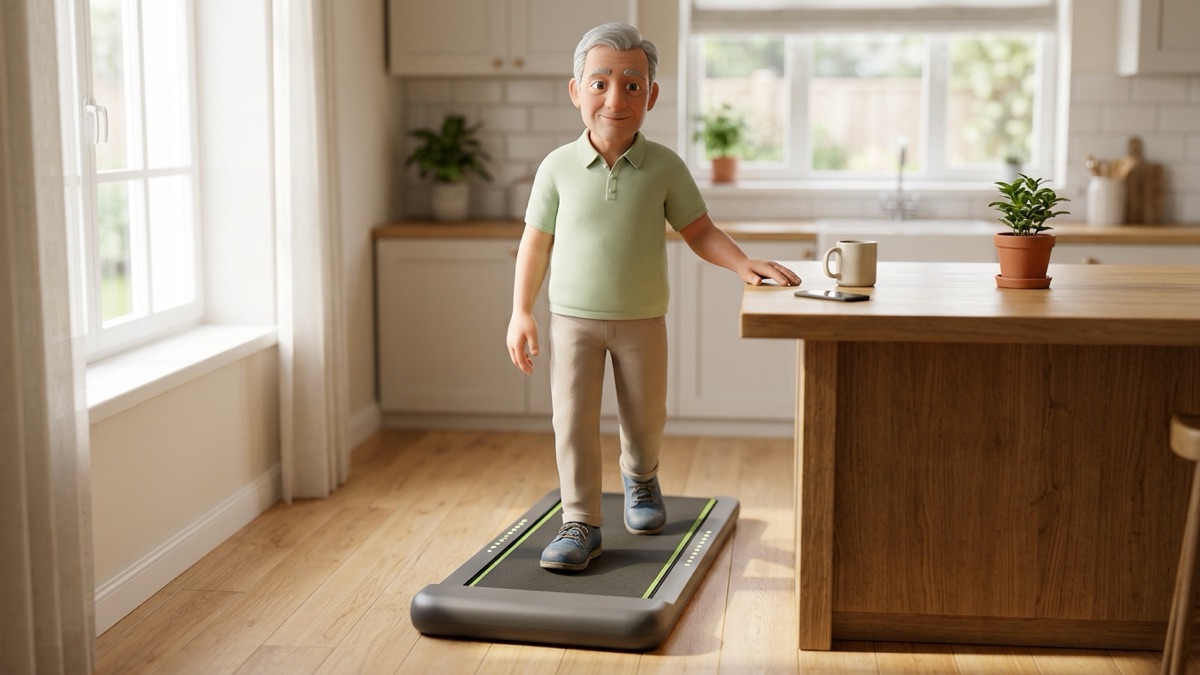
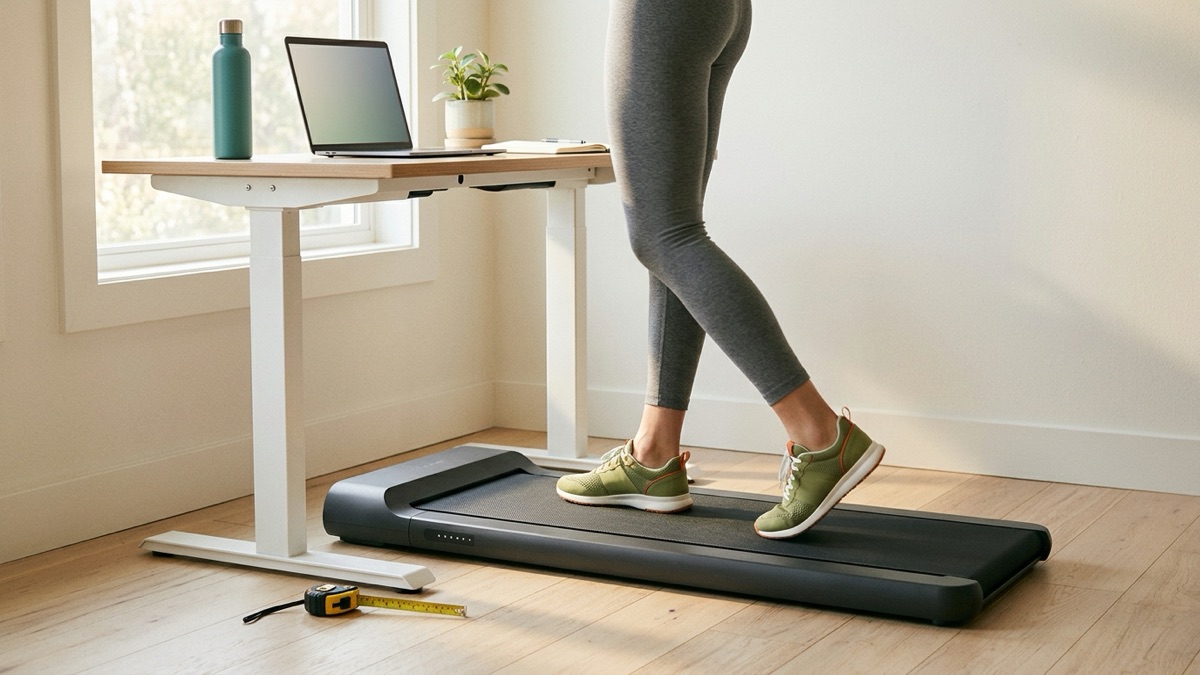
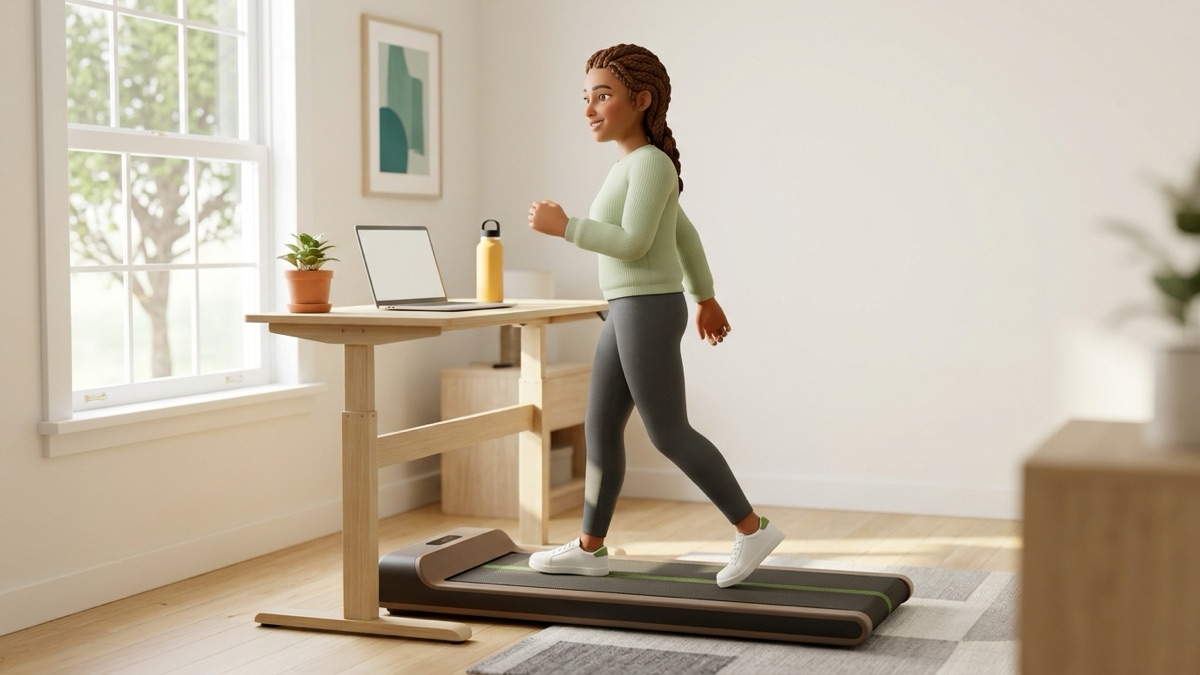
Winter sidewalks, summer heat, a knee that does not love hills: there are plenty of good reasons an older adult might want to walk indoors. A walking pad makes that possible in a hallway or beside the kitchen counter. It also removes the handrails a treadmill would have, so the setup deserves more thought than the purchase.
Quick answer
A walking pad can be a safe way for an older adult to reach the CDC's 150 weekly minutes indoors if it sits on a flat floor beside something sturdy to hold, starts at its lowest speed and is used in shoes with grip. Pads have no handrails, so anyone with balance problems, a heart condition or recent surgery should ask a doctor first.
Key takeaways
- The CDC asks adults 65 and older for at least 150 minutes of moderate activity a week, two days of muscle strengthening and balance activities. Any amount counts; short walks add up.
- More than one in four older adults falls each year, so the setup around the pad matters more than the pad itself: flat floor, clear space, cords away, something to hold.
- Start at the lowest speed, usually 0.5 to 1 mph, and build toward 2 mph. Use the talk test: you should be able to talk but not sing.
- Pads rarely have handrails. A sturdy desk or counter at the side is the minimum; a 2-in-1 with a fold-up rail or a full treadmill is the answer for anyone who needs to hold on.
- Buy on weight capacity, a low minimum speed, a simple remote and deck size, not on apps or top speed.
Is a walking pad a good idea for an older adult?
Walking is the activity the guidelines are built around, and the guidelines are generous about how it is done. The CDC's page for older adults asks for at least 150 minutes a week at moderate intensity (or 75 vigorous), at least two days of muscle-strengthening activity, and activities to improve balance. The second edition of the Physical Activity Guidelines for Americans adds that "any amount of physical activity has some health benefits", that adults should "move more and sit less", and that physical activity lowers older adults' risk of falls and fall-related injuries. It also removed the older rule that only 10-minute bouts counted, which suits a pad perfectly: four 10-minute walks spread through a day are as good as one long one.
MedlinePlus, the National Library of Medicine's consumer site, describes four kinds of exercise that older adults need: endurance, strength, balance and flexibility. A pad covers the first. It does nothing for the other three, so a pad walker should still do something for balance and strength on other days. And MedlinePlus's first piece of advice applies to everyone reading this: "Check with your health care provider on what is right for you", and if you have not been active, start slowly and work up to your goal.
Heads up
Talk with your doctor before starting if you have a heart condition, uncontrolled blood pressure, dizziness or fainting, a recent surgery or fall, osteoporosis, neuropathy in your feet, or joint problems that make you unsteady. Ask specifically whether a machine without handrails is sensible for you. Stop any session if you feel chest pain, dizziness, unusual shortness of breath or pain.
What makes a pad risky, and how do you fix it?
The CDC's falls data is the reason this guide spends so long on setup: "more than one out of four older people falls each year, but less than half tell their doctor", falls lead to about 4.5 million emergency department visits a year, and nearly 319,000 older adults are hospitalized for hip fractures annually. A moving belt that stops suddenly, a cord across the floor or a wobbly desk is exactly the kind of hazard those numbers come from.
| Risk | Why it happens on a pad | What to do |
|---|---|---|
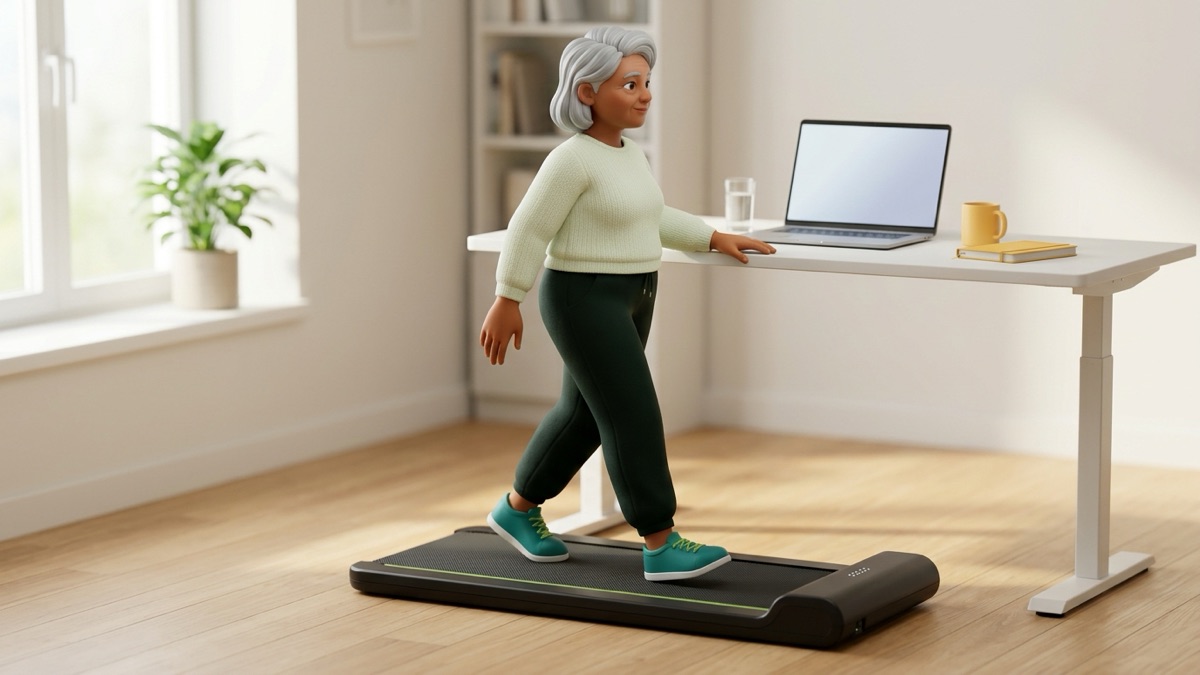
| Nothing to hold | Pads have no rails | Place the pad beside a sturdy desk, counter or wall rail; never beside a rolling chair |
| Stepping on or off a moving belt | The belt is low and quiet | Start and stop the belt with both feet on the side strips or standing still; wait for a full stop before stepping off |
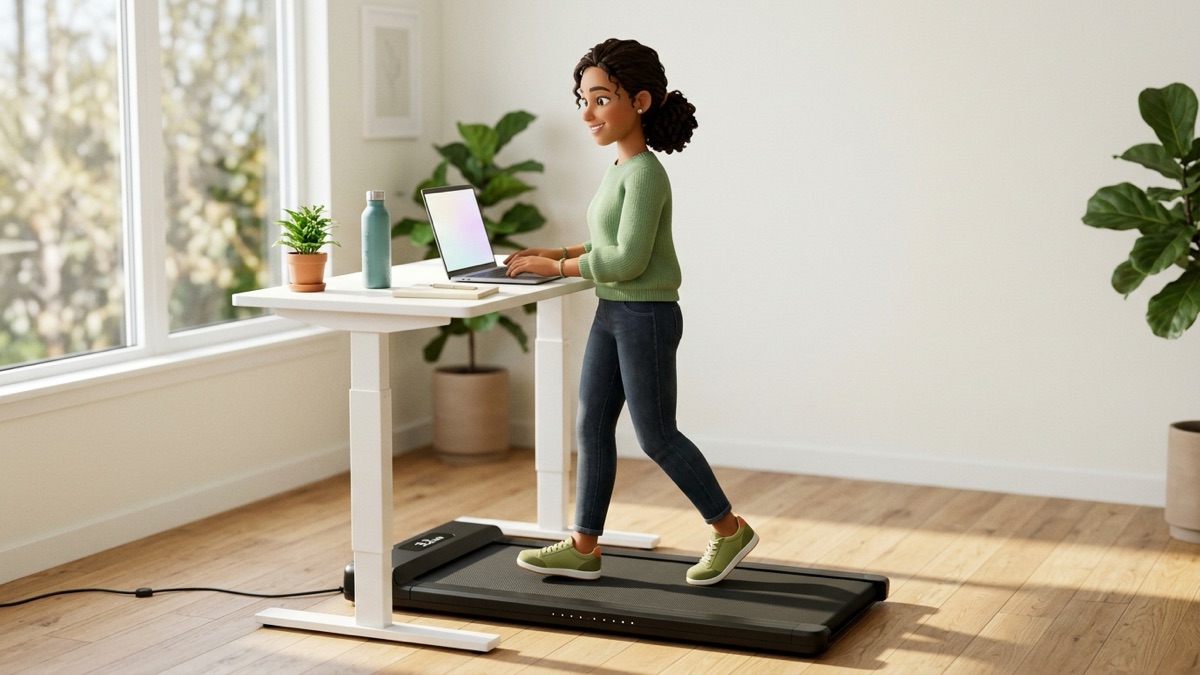
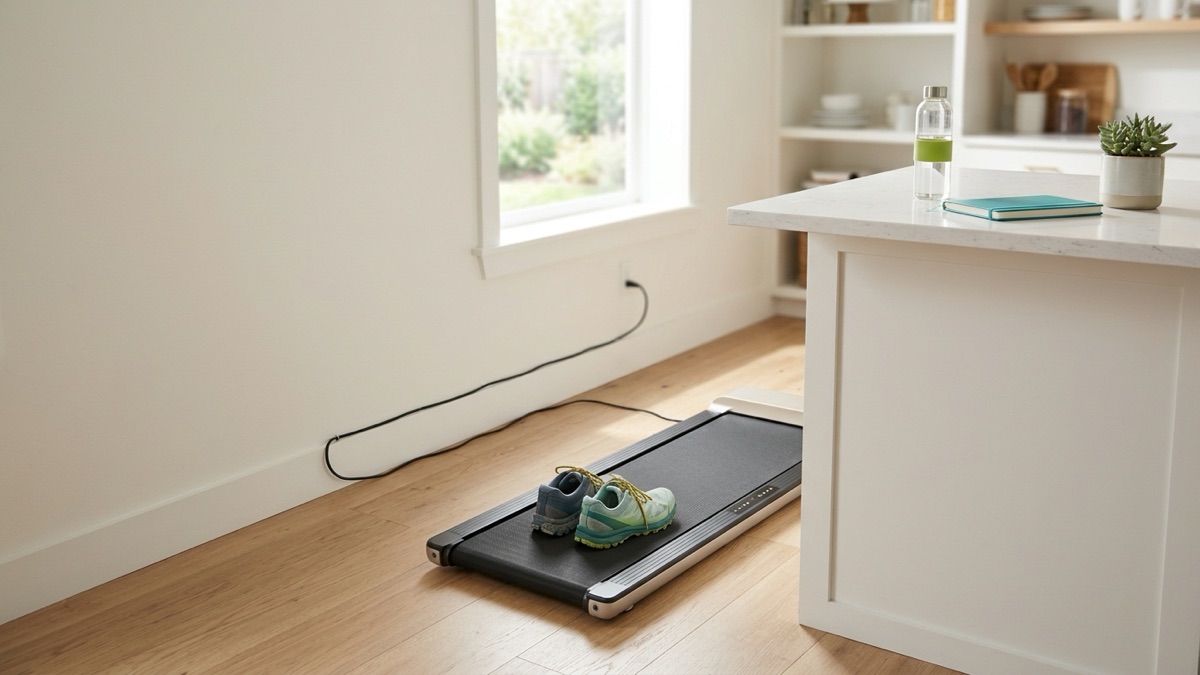
| Cords and remote | A power cord runs to the wall; many pads use a remote or a key | Route the cord behind the pad along the wall; keep the remote or safety key in a pocket, not on the desk |
| Carpet, rugs and clutter | A pad shifts or wobbles on soft or uneven floors | Hard, level floor with 3 feet of clear space behind the belt and no rug edges nearby |
| Speed creep | A remote tap can add speed quickly | Learn the remote while standing still; set the pad to its minimum before every session |
| Footwear | Socks and slippers slide on a textured belt | Closed shoes with grip, laced, every time |
Our guide to walking pad safety goes through cords, children, pets and the safety key in more detail, and walking pads and balance is the honest decision guide for anyone who is unsure whether a pad is the right machine at all.
What speed should a senior walk on a walking pad?
Slower than the box suggests. Most pads start between 0.5 and 1 mph, and that is the right first speed: slow enough to learn how the belt feels underfoot while you have a hand on the counter. Build toward 1.5 and then 2 mph over a couple of weeks, adding a notch when the current speed feels easy for the whole session.
The CDC's example of moderate intensity is walking briskly at 2.5 miles per hour or faster, and its talk test is the simplest check anyone can do: during moderate activity you can talk but not sing. If you can sing, you can speed up a little; if you cannot talk, slow down. For a lot of older walkers, 2 to 2.5 mph with the talk test is the sweet spot, and there is no need to chase a pad's 3.5 or 4 mph ceiling. Our walking pad speed guide has the full table of speeds and what they are for.
A first fortnight might look like this. Every row assumes a hand within reach of something sturdy and shoes on.
| Days | Speed | Time | Sessions a day |
|---|---|---|---|
| 1 to 3 | lowest setting (about 0.5 to 1 mph) | 5 to 10 minutes | 1 or 2 |
| 4 to 7 | 1 to 1.5 mph | 10 to 15 minutes | 2 |
| 8 to 11 | 1.5 to 2 mph | 15 minutes | 2 |
| 12 to 14 | 2 mph, 2.5 if the talk test allows | 15 to 20 minutes | 2 |
Two 15-minute walks a day, five days a week, is already the 150 weekly minutes. The indoor walking plan for seniors stretches this into a four-week program with balance work on the days off.
Try it
The walking pad calories calculator shows how a 15-minute walk at 2 mph compares with 2.5 mph in METs, and how much of the weekly 150 minutes each session covers. The point is not the calories; it is seeing that gentle sessions count.
What should you look for when buying?
For an older walker the features that matter are the boring ones. Here is what the makers' own pages say about four machines as of November 2026, in alphabetical order, to show the range rather than to rank them. PadStride is made by Viral Labs and is not affiliated with any walking pad brand, retailer or app named here.
| Machine (maker's page, November 2026) | Type | Speed range | Max user weight | Handrails | Noise, if published |
|---|---|---|---|---|---|
| Egofit Walker Pro M1 | pad, fixed 5 percent incline | 0.62 to 3.11 mph | 220 lb | none | under 70 dB |
| Horizon T101 | full treadmill | 0.5 to 10 mph | 300 lb | yes | not stated |
| UREVO SpaceWalk 5L | pad, 0 to 9 percent incline | 0.6 to 4.0 mph | 400 lb | none | not stated |
| WalkingPad A1 Pro | pad, flat | 0.5 to 3.75 mph | 300 lb | none | under 65 dB |
What to take from a table like this:
- Minimum speed. Look for 0.5 or 0.6 mph. A pad that starts at 1 mph is a brisker first step than many older walkers want.
- Weight capacity. Choose a rating comfortably above the walker's weight; ratings run from 220 to 400 lb on the pads above. Our 300 lb capacity guide explains what the rating does and does not cover.
- Deck size and height. A longer belt forgives a wandering step. A deck 6 to 7 inches tall is a step up and a step down every session; think about that on the way off.
- Simple controls. A remote with big plus and minus buttons and a clear stop beats an app. Check how the pad stops if the remote is dropped.
- A rail. None of the pads above has one. Our handrail guide covers the 2-in-1 pads with a fold-up bar, and when a treadmill is simply the better buy.
- Incline. A fixed incline, like the Egofit's 5 percent, is a small permanent hill. Fine for some knees, hard on others; the bad knees guide weighs it up.
When is a treadmill the better choice?
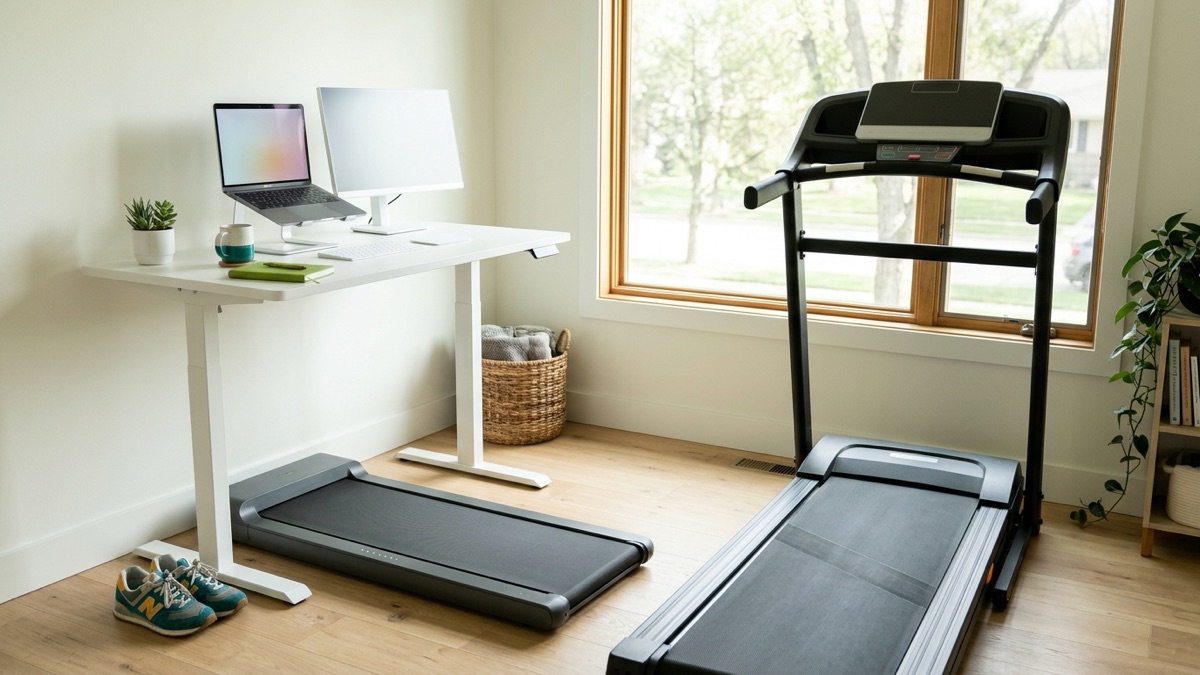
When holding on is part of walking. A treadmill has two rails, a wider and longer running surface and, on the Horizon T101's page, a 0.5 mph minimum, the same slow start as a good pad. The costs are the obvious ones: that treadmill weighs 180 lb to a pad's 48 to 63 lb, stands five feet tall and takes a corner of a room rather than the space under a bed. Our walking pad vs treadmill comparison covers the full tradeoff.
A fair rule: if the walker would hold the rail on a treadmill, they should not be on a pad without something equally sturdy beside them. If they would not touch the rail, a pad is a lighter, cheaper, easier machine to live with.
How do you keep the habit going?
Older adults who do best with a pad tend to tie it to something they already do: the morning news, a phone call with a daughter, a podcast. Two sessions of 10 to 15 minutes beat one heroic hour, and the guidelines agree. Keep a paper log by the pad with the date, minutes and speed; three honest numbers are more motivating than any dashboard. The PadStride app, coming to Android first, will keep that log from the speed you set and show the week's miles, and it will be simple enough to hand to a parent.
The takeaway
A walking pad gives an older adult a flat, quiet, indoor way to collect the 150 minutes a week the CDC asks for. The machine is the easy part. The floor, the cord, the shoes, a counter to hold and a speed that passes the talk test are what make it safe, and a frank conversation with a doctor about balance decides whether it should be a pad at all.
PadStride guides explain and estimate; they do not promise weight loss or any health result. Calorie figures come from a published equation and carry its limits, and nothing here is medical advice. If you have a heart condition, joint or balance problems, or are pregnant, talk with your doctor before you start, keep the speed low while you type, and stop if you feel dizzy, short of breath or in pain.
Questions walkers ask
Is a walking pad safe for seniors?
It can be, with the right setup: a flat floor, clear space behind the pad, cords out of the way, a sturdy desk or counter to steady yourself, the lowest starting speed and shoes with grip. Anyone with balance problems, a heart condition or a recent surgery should talk with a doctor first, and may be better served by a treadmill with handrails.
What speed should an older adult walk on a walking pad?
Start at the pad's lowest setting, often 0.5 to 1 mph, and build toward 2 mph over a couple of weeks. The CDC's example of moderate intensity is walking briskly at 2.5 mph or faster, but a comfortable pace you can hold while talking is the right first target.
Do walking pads have handrails?
Most do not; they are built to slide under a desk. Some 2-in-1 models have a fold-up rail, and a full treadmill always has rails. If steadying yourself matters, choose one of those or place the pad beside a sturdy desk or counter you can hold.
How much should a senior walk each week?
The CDC recommends that adults 65 and older get at least 150 minutes of moderate activity a week, two days of muscle strengthening and activities that improve balance. Short sessions count; the current guidelines dropped the old rule that only 10-minute bouts mattered.
Is a treadmill better than a walking pad for an elderly person?
For anyone who needs a rail, yes. A treadmill has handrails, a wider and longer deck and a slower minimum speed on many models, at the cost of size, weight and price. A pad suits steady walkers who want something low, light and easy to put away.
Where these facts come from
- CDC: Older Adult Activity: An Overview: www.cdc.gov/physical-activity-basics/guidelines/older-adults.html
- CDC: Older Adult Falls Data: www.cdc.gov/falls/data-research/facts-stats/index.html
- CDC: How to Measure Physical Activity Intensity: www.cdc.gov/physical-activity-basics/measuring/index.html
- MedlinePlus: Exercise for Older Adults: medlineplus.gov/exerciseforolderadults.html
- Physical Activity Guidelines for Americans, 2nd edition: Top 10 Things to Know: odphp.health.gov/our-work/nutrition-physical-activity/physical-activity-guidelin
- WalkingPad: A1 Pro specifications: www.walkingpad.com/products/walkingpad-a1-pro-foldable-treadmill
- UREVO: SpaceWalk 5L specifications: www.urevo.com/products/urevo-spacewalk-5l-smart-walking-pad
- Egofit: Walker Pro M1 specifications: www.egofitwalker.com/products/m1-under-desk-treadmill
- Horizon Fitness: T101 treadmill specifications: www.horizonfitness.com/t101-treadmill