Blog compare
Walking Pad vs Treadmill: Which One Should You Buy?
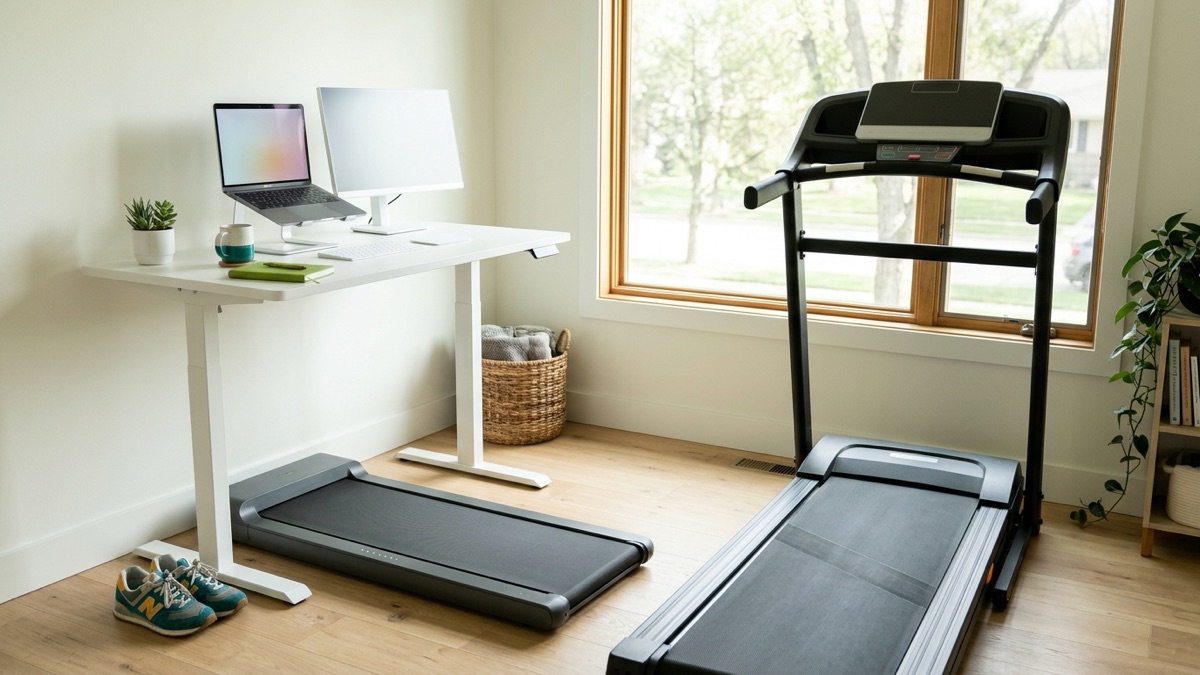
The two machines look like cousins and get sold under the same search term, which is how people end up with a treadmill they cannot fit under the desk or a pad they cannot do 12-3-30 on. The difference is not quality. It is what each one is for.
Quick answer
A walking pad is a low, rail-free deck built to sit under a desk: flat or gently inclined, capped near 3 to 4 mph, around 50 lb, and easy to store. A treadmill is a workout machine: handrails, incline to 10 percent or more, speeds to 10 mph, and 180 lb or so. Buy the pad to walk while you work; buy the treadmill to work out, run or do 12-3-30 as written.
Key takeaways
- The deciding question is where the hours will happen. Under a desk while working means a pad. Standing at a console sweating means a treadmill.
- On the makers' pages as of November 2026, pads top out at 3.11 to 4 mph and tilt to between zero and 14 percent; a budget treadmill reaches 10 mph and 10 percent incline.
- Pads weigh 48 to 63 lb and stand 6 to 7 inches tall; the treadmill in this guide weighs 180 lb and stands 59 inches tall.
- Handrails are the safety line. Pads have none, so anyone who needs to hold on belongs on a treadmill or beside a sturdy desk.
- Price is not the gap it used to be: pads here list from $279.99 to $499.99 and the treadmill at $699 on sale, as of November 2026.
What is the difference between a walking pad and a treadmill?
A treadmill is the machine you picture: a long belt, a tall console with buttons, two handrails and a motor strong enough for running, usually with a deck that tilts. A walking pad strips all of that away. It is a belt, a motor and a low deck a few inches tall, controlled by a remote or an app, designed to slide under a standing desk or a bed. Some fold in half, a few tilt a little, and most stop somewhere short of a jog. Our what is a walking pad guide goes through the terms makers use, since "under desk treadmill", "desk treadmill" and "walking pad" describe the same thing more often than not.
The specs below come from the makers' own product pages, read in November 2026, listed alphabetically. They are examples of the range, not a ranking. PadStride is made by Viral Labs and is not affiliated with any walking pad brand, retailer or app named here.
| Machine (maker's page, November 2026) | Type | Speed | Incline | Max user weight | Weight | Noise, if stated |
|---|---|---|---|---|---|---|
| Egofit Walker Pro M1 | pad | 0.62 to 3.11 mph | fixed 5 percent | 220 lb | 48.5 lb | under 70 dB |
| Horizon T101 | folding treadmill | 0.5 to 10 mph | 0 to 10 percent | 300 lb | 180 lb | not stated |
| UREVO CyberPad for Home Pro | pad with incline | 0.6 to 4.0 mph | 0 to 14 percent, automatic | 400 lb | 63.1 lb | not stated |
| UREVO SpaceWalk 5L | pad with incline | 0.6 to 4.0 mph | 0 to 9 percent, automatic | 400 lb | 50.7 lb | not stated |
| WalkingPad A1 Pro | pad | 0.5 to 3.75 mph | none listed | 300 lb | about 69 lb shipping weight | under 65 dB |
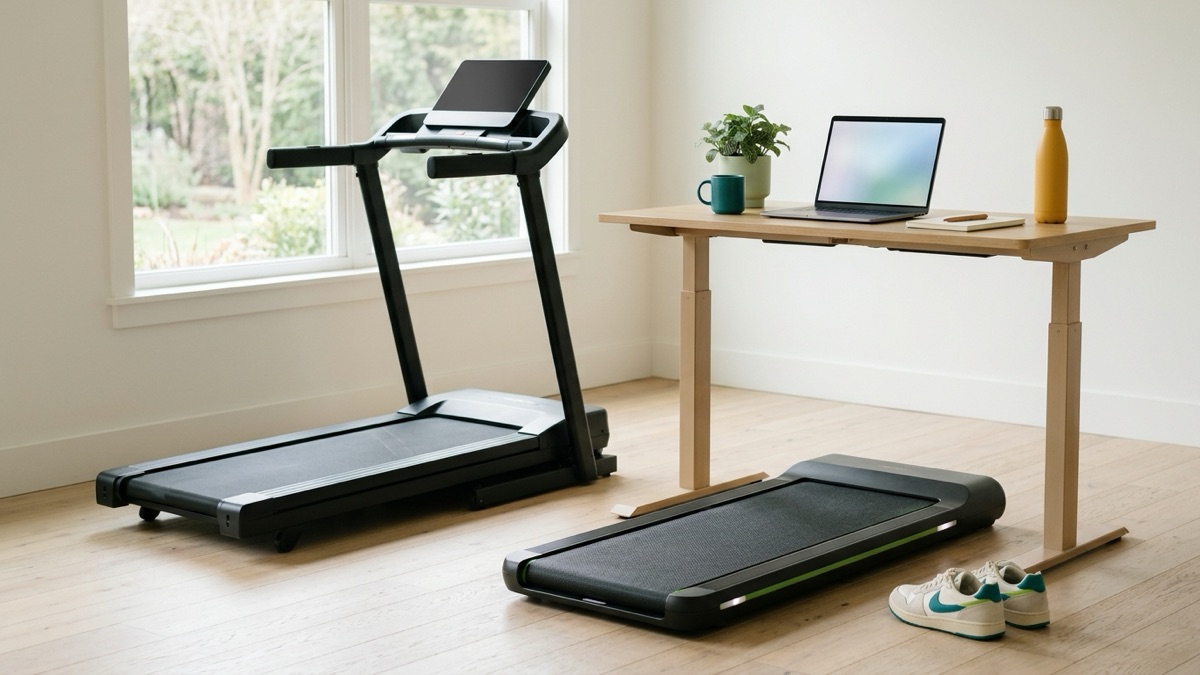
Read down the columns and the two categories separate themselves. Speed: pads stop at 3.11 to 4 mph; the treadmill goes to 10. Incline: most pads offer none or a fixed few percent, the taller ones 9 to 14; the treadmill does 10 with rails to hold while it tilts. Weight: a pad is something one person carries to the closet; the treadmill is a piece of furniture.
Which one is better for working at a desk?
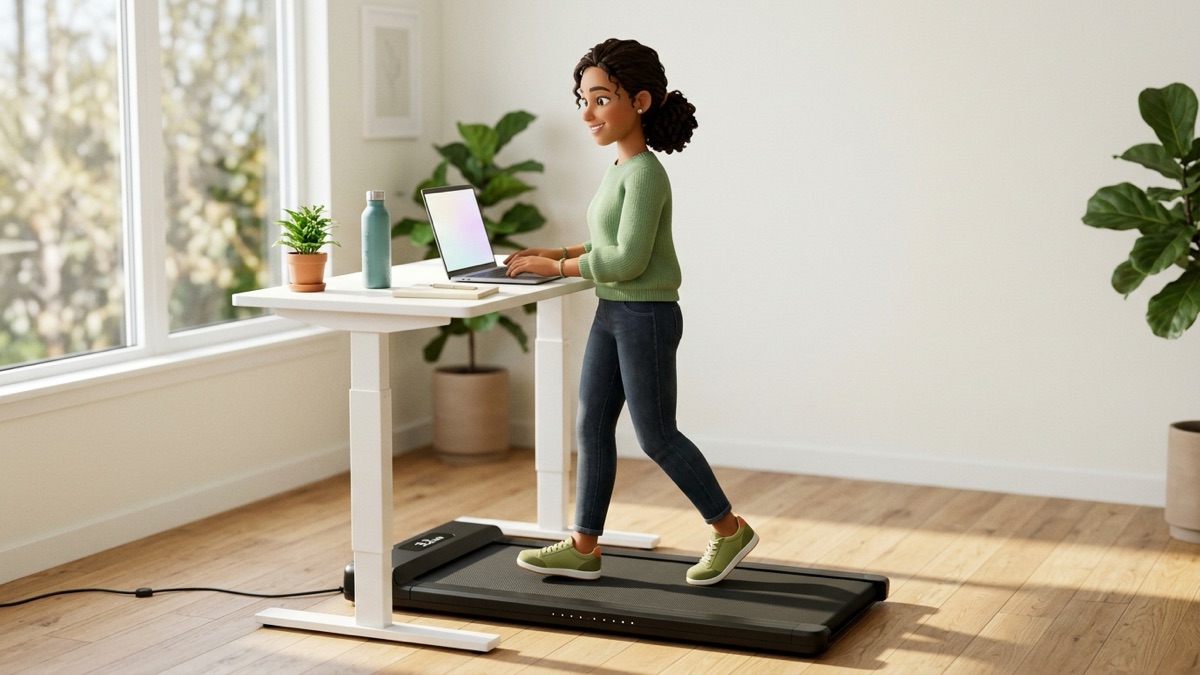
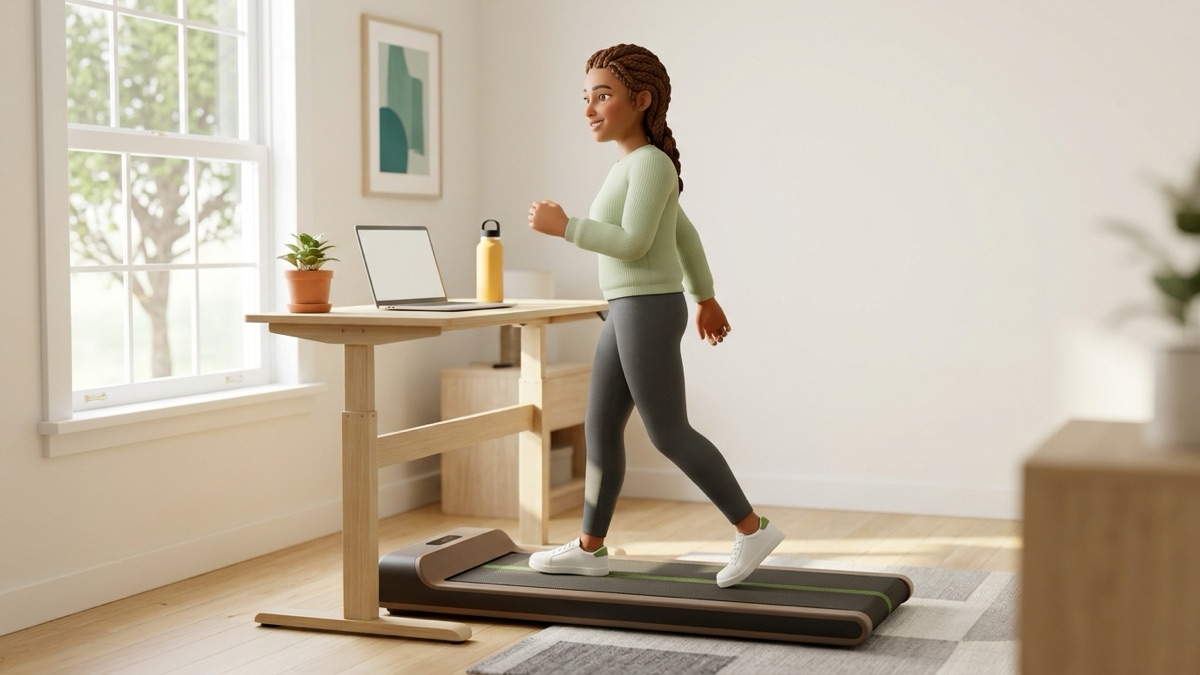
The pad, by a distance, because the treadmill cannot do it at all. A treadmill's console sits where your keyboard would be, its rails are where your elbows want to go, and its deck height puts your head somewhere near the ceiling fan. A pad is designed around the desk: the deck height is 6 to 7 inches on the pads above, so a standing desk raised that much more puts the keyboard back at elbow height, and there is nothing in front of you but your monitor.
Speed is the second reason. Typing happens at 1 to 2 mph for most people; above that, accuracy drops and calls get breathy. Every pad in the table starts at 0.5 or 0.6 mph, and their 3 to 4 mph ceilings are not a limitation for desk work, they are the point. Our walking pad desk setup guide covers desk height, monitor position and cable routing, and walking pad while working covers which tasks suit which speed.
Tip
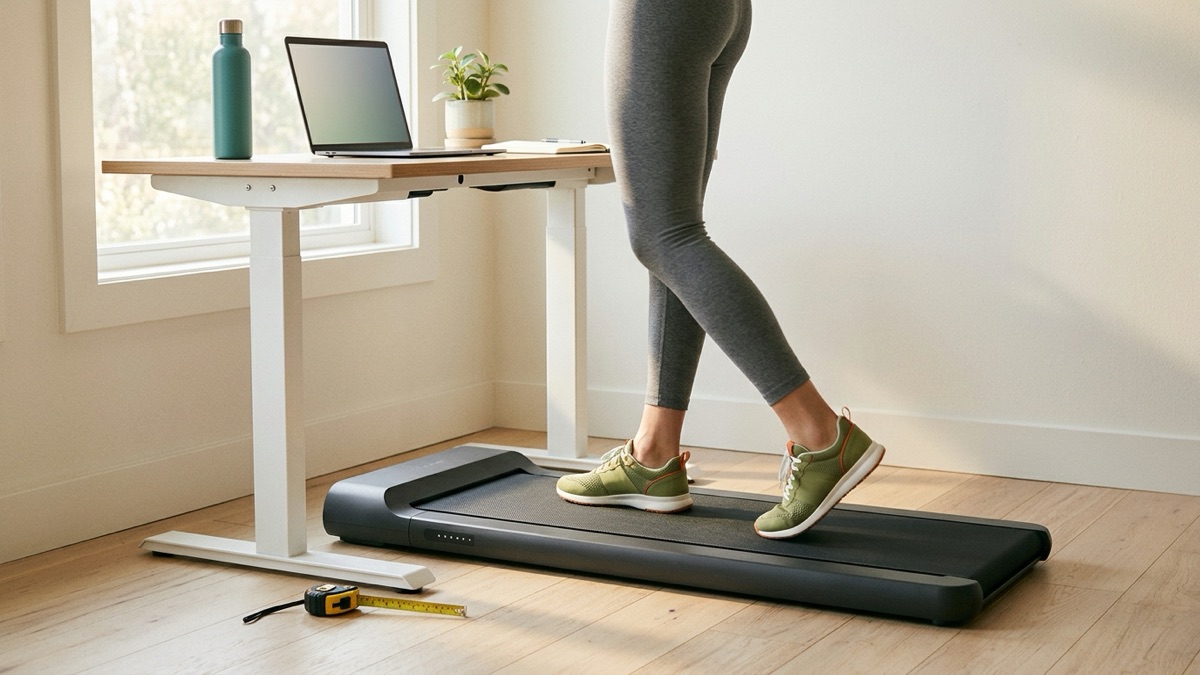
Before buying a pad, measure the gap under your standing desk at its highest setting. You need the deck height plus your height plus a little headroom, and a desk that tops out at 48 inches may not be enough for a tall walker on a 7-inch deck.
Which one is better for workouts?
The treadmill, for anything that involves incline, speed or holding on. Take 12-3-30, the incline-walking routine that sends so many people shopping. It calls for a 12 percent grade, and the only pads in the table that reach it are the tall UREVO CyberPad models; the others stop at 5 or 9 percent or have no incline at all. By the ACSM walking equation, 3 mph at 12 percent is about 8.3 METs, while 3 mph flat is 3.3 METs, so the hill is most of the workout. Our 12-3-30 on a walking pad guide works out the longer or faster pad versions that match the energy, and they are long: about 75 minutes on a flat belt.
Running is simpler: pads are not for it. Jogging begins around 4 to 5 mph for most people, every pad above stops at 4 or below, and none has a rail. The 2-in-1 machines that advertise running speeds with a fold-up bar are, by weight and height, small treadmills. The can you run on a walking pad guide explains where the line sits.
Try it
The walking pad calories calculator shows METs and calories for any speed and incline, so you can see what 3 mph at 5 percent on a pad is worth against 12 percent on a treadmill before you buy either.
That said, a pad is a fine workout machine for walking itself. The CDC counts walking briskly at 2.5 mph or faster as moderate intensity, and 3 to 3.5 mph on a flat pad lands at 3.3 to 3.7 METs, comfortably inside the 3 to 5.9 MET moderate band. If your workout is a brisk 45-minute walk while you listen to something, a pad does it as well as a treadmill and puts itself away afterward.
How do they compare on space, weight and noise?
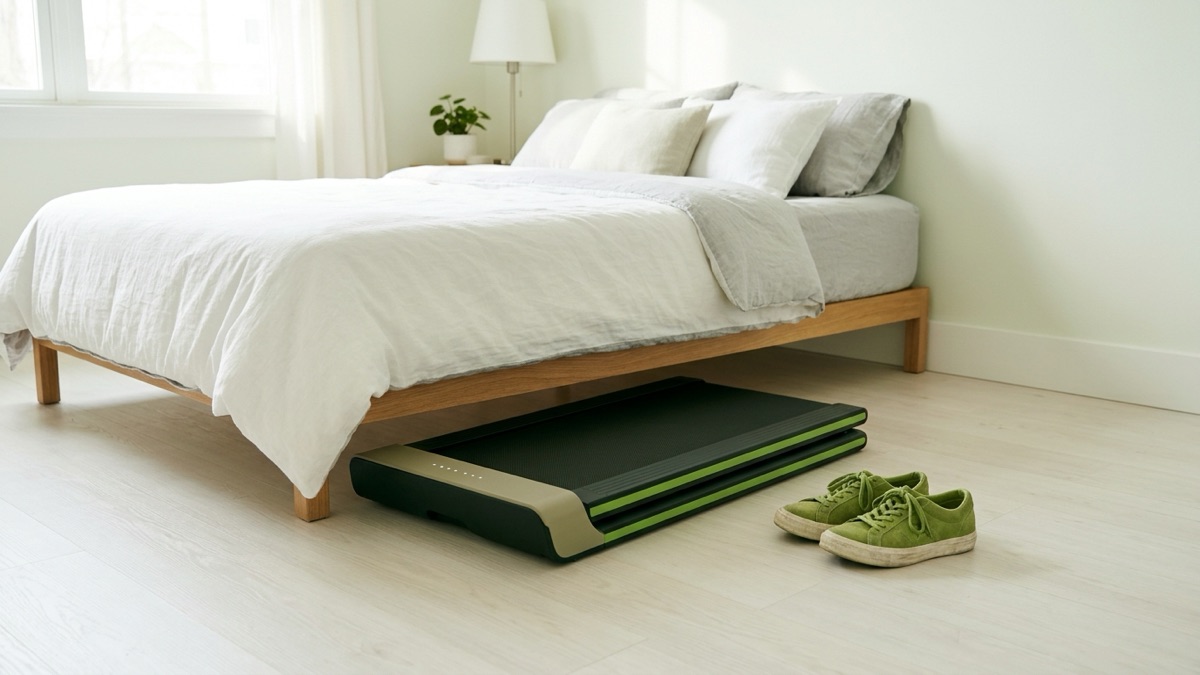
A pad is the clear winner on everything to do with living with the machine. The Horizon T101's page lists it at 70.5 by 33.5 by 59 inches assembled and 46 by 34 by 61 inches folded, at 180 lb. The pads above are roughly 38 to 49 inches long, 20 to 23 inches wide and 6 to 7 inches tall, at 48 to 63 lb; the WalkingPad C2 folds in half and its maker says it stands only 5.3 inches when stored. A pad goes under a bed. A treadmill gets a corner of a room for the rest of its life.
Noise is harder to compare because most makers do not publish a number. Two pads do: WalkingPad states under 65 dB for the A1 Pro and Egofit under 70 dB for the Walker Pro M1. Horizon states nothing for the T101. In practice most of the noise from either machine is footfall and the floor underneath, which is why a mat and a hard, level floor matter. The walking pad noise guide covers what the decibel figures mean and how to quiet a pad in an apartment.
How much do they cost?
Less apart than you might think, as of November 2026 and on the makers' own pages. The Egofit Walker Pro M1 lists at $399 new, the UREVO SpaceWalk 5L at $279.99 (marked down from $399.99), the WalkingPad C2 at $399 (from $599) and the WalkingPad A1 Pro at $499 (from $699). The UREVO CyberPad for Home Pro shows a $499.99 headline price with a $399.99 discount box on the same page. The Horizon T101 lists at $699 on sale from $999, and was marked sold out when we checked.
So a capable pad costs $280 to $500 and a budget treadmill about $700, a gap of a few hundred dollars that buys handrails, incline, speed and a lot of steel. Prices move constantly and sales are the norm, so treat these as a snapshot and check the maker's page before you decide. Our best walking pad guide explains which specs are worth paying for and which are marketing.
Fun fact
The Horizon T101 weighs about the same as three and a half UREVO SpaceWalk 5Ls. Most of that extra weight is the frame that lets it take a runner at 10 mph without walking across the room.
Who should buy which?
Buy a walking pad if most of these are true:
- You will use it mainly under a desk, at speeds where you can still type or talk.
- You need it to disappear: under a bed, in a closet, behind a couch.
- You do not need to hold on, and your balance is good.
- Your workouts are brisk walks, not runs or steep hills.
- You live with neighbors below or thin walls and want the quieter, lighter machine.
Buy a treadmill if most of these are true:
- You want 12-3-30 as written, incline intervals or any running.
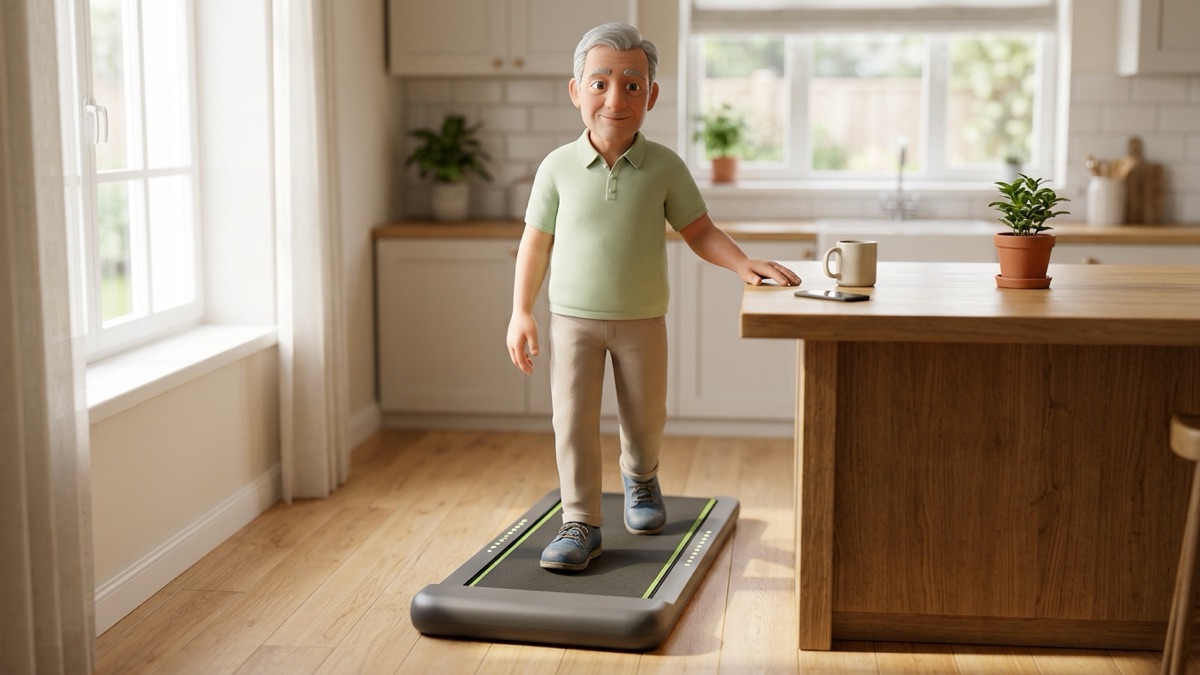
- You or the person using it needs handrails to feel steady. Our walking pads for seniors guide is frank about when a pad is the wrong machine.
- You have a permanent spot for a 180 lb piece of furniture.
- You prefer a console with buttons to a remote and an app.
If you are honestly split, the deciding question is hours. Most people have far more desk hours than workout hours, and a pad turns a few of them into miles without asking for any time back. The are walking pads worth it guide does that math against the weekly activity guideline.
Heads up
Whichever you choose, set it on a flat floor with clear space behind the belt, route cords away from your feet, wear shoes with grip, keep the speed low while you type, and stop if you feel dizzy, short of breath or in pain. If you have a heart condition, joint or balance problems, or are pregnant, talk with your doctor before starting, and ask specifically about a machine with no rails.
The takeaway
A walking pad and a treadmill are not a good and a better version of the same thing. The pad is a floor that moves, built for the hours you were already going to spend at a desk. The treadmill is a workout station, built for incline, speed and holding on. Decide where your hours are, measure the gap under your desk, and buy the machine that fits that life. The PadStride app, coming to Android first, will count sessions on either from the speed you set, since neither machine needs to talk to your phone for the math to work.
PadStride guides explain and estimate; they do not promise weight loss or any health result. Calorie figures come from a published equation and carry its limits, and nothing here is medical advice. If you have a heart condition, joint or balance problems, or are pregnant, talk with your doctor before you start, keep the speed low while you type, and stop if you feel dizzy, short of breath or in pain.
Questions walkers ask
What is the difference between a walking pad and a treadmill?
A walking pad is a low, rail-free, usually flat deck that slides under a desk and caps speed around 3 to 4 mph. A treadmill has handrails, a console, a longer and wider belt, incline, and speeds up to 10 mph or more. The pad is for walking while you do something else; the treadmill is for workouts.
Can you run on a walking pad?
Not on most of them. On the makers' pages as of November 2026, pads top out between 3.11 and 4 mph, and jogging starts around 4 to 5 mph for most people. Some 2-in-1 models with a fold-up rail go faster, but they are heavier and taller than a true pad.
Is a walking pad worth it over a treadmill?
If you want to walk while working, in a small space, and have no need for a rail or incline, a pad does that job for less money and far less room. If you want incline, speed, handrails or a single long workout, a treadmill is the better machine.
How much do walking pads and treadmills cost?
As of November 2026 the pads on the makers' pages in this guide list between $279.99 and $499.99, and a budget folding treadmill, the Horizon T101, lists at $699 on sale from $999. Prices change often; check the maker's page.
Which is better for seniors, a walking pad or a treadmill?
For anyone who needs to hold on, a treadmill with handrails. For a steady walker who wants something low, light and easy to store, a pad placed beside a sturdy desk or counter works well. When in doubt, ask a doctor about balance first.
Where these facts come from
- WalkingPad: A1 Pro specifications: www.walkingpad.com/products/walkingpad-a1-pro-foldable-treadmill
- WalkingPad: C2 product page: www.walkingpad.com/products/walkingpad-c2-foldable-walking-machine
- UREVO: SpaceWalk 5L specifications: www.urevo.com/products/urevo-spacewalk-5l-smart-walking-pad
- UREVO: CyberPad for Home Pro specifications: www.urevo.com/products/urevo-cyberpad-for-home-pro-smart-treadmill
- Egofit: Walker Pro M1 specifications: www.egofitwalker.com/products/m1-under-desk-treadmill
- Horizon Fitness: T101 treadmill specifications: www.horizonfitness.com/t101-treadmill
- CDC: How to Measure Physical Activity Intensity: www.cdc.gov/physical-activity-basics/measuring/index.html
- Moore et al., Development of a Cadence-Based Metabolic Equation for Walking, Medicine and Science in Sports and Exercise 2021 (the ACSM walking equation): pmc.ncbi.nlm.nih.gov/articles/PMC7896743